Recovery Insights from Norseman Triathlete Frankie Forzoni
Recovery Insights from Norseman Triathlete Frankie Forzoni
Recovery Insights from Norseman Triathlete Frankie Forzoni

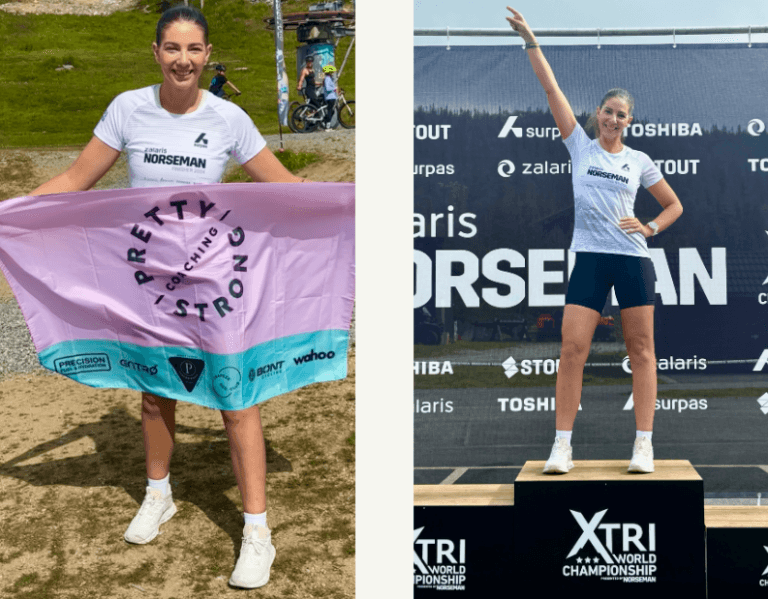
Frankie Forzoni is the Founder, Owner, and Head Coach of Pretty Strong Coaching. Having transformed her own struggles with depression, chronic pain, and severe injuries into a journey of healing and empowerment, she founded Pretty Strong Coaching to help women achieve their fitness goals and embrace a healthier lifestyle. Despite facing extreme challenges, Frankie has completed the Norseman Xtreme Triathlon, widely regarded as the toughest Ironman on the planet, and is a four-time marathon runner.
A regular at Hideaway, Frankie has leaned on both our infrared sauna and cold plunge as part of her training and recovery. We sat down with her to find out more.
How and when did you get your start with Norseman Xtreme Triathlon?
I got into Norseman in October 2023, and they gave you a week to question all your life decisions! After speaking to several friends who had been to Norseman, either as an athlete or support crew, I knew I had to do it.
Could you share more about how recovery has helped you prepare for your races?
Norseman starts with a jump off the back of a ferry into an icy fjord. Being based in Singapore, the lowest temperature I could access was 21 degrees, but I needed to get used to 10 to 15 degrees. The only way to do that was with regular ice baths, first at Trapeze and then now at Hideaway. I would never have gotten through that swim without it.
Beyond the cold, I was hitting up to 20 hours of training a week, and the infrared sauna was a game changer. I had never used one before, but it helped me de-stress, relax, sleep better, and recover faster.
What was the toughest moment of the race, and would you do it again?
The toughest part was hitting 140km into the ride. It's the last point where you can't see your support crew, and the next 10km is uphill after a brutal climb. You're alone, 10 hours into the race, fighting strong winds and hailstones. It's relentless. But that's Norseman. It pushes you to your absolute limits.
I would 100% do it all over again. It was hands down the most amazing race I've ever done. Get me back as soon as possible!
What are your current recovery protocols?
As a triathlete, managing recovery is just as important as the three disciplines themselves. Training for Norseman, a 3.9km swim, 180.2km cycle, and 42.2km run, meant my body was under significant stress each week. Both cold plunge and infrared sauna have been essential to my performance. Here's how I use each.
Cold Plunge
Frequency: 3 to 4 times a week, ideally after intense training sessions
Duration: Start with 1 minute and gradually increase to 5 minutes as tolerance builds. I tend to leave my hands out of the tub, as they're my weak point
Temperature: I personally go for around 4°C to 8°C, though 10°C to 15°C is plenty for most people to reduce inflammation and aid recovery
Infrared Sauna
Frequency: 3 to 4 times a week, either post-workout or on rest days
Duration: 45 minutes
Temperature: 45°C to 60°C is sufficient for most benefits without too much discomfort
Tips for Beginners
Start slow: Begin with shorter durations and milder temperatures. For the sauna, start with 15 to 20 minutes and build up to 30 to 40 minutes as your body adapts. For the cold plunge, ease in gradually, exposing smaller parts of your body before full immersion.
Breathe: Practise deep breathing to help manage the shock of the cold and stay calm.
Hydrate: Drink plenty of water before and after each session to prevent dehydration.
Listen to your body: If you feel dizzy or unwell, exit and rest.
Warm up after: The shivering after cold exposure is your body warming itself up, so follow it with a warm shower or a hot drink to help your body return to its normal temperature.
Advanced Techniques for Enhanced Recovery
Contrast therapy: Alternating between infrared sauna and cold plunge promotes blood flow and reduces muscle soreness. Try 10 minutes in the sauna followed by 1 minute in the cold plunge, repeated 2 to 3 times. Always end on cold.
Targeted cold therapy: Focus cold water immersion on specific muscle groups that are particularly sore or inflamed.
Breathing techniques: Practise breathwork such as the Wim Hof Method before your session, on dry land, and never in or just before the water, to build mental resilience and improve oxygenation. His books and app are a great place to start. (Combining this style of breathing with being in water can be dangerous, so always keep the two separate.)
Stretching and mobility: Pair infrared sauna sessions with gentle stretching or yoga to enhance flexibility and muscle relaxation.
Active recovery: On rest days, low-intensity movement like walking or light cycling promotes blood flow without added stress.
Massage therapy: Combine Bathhouse use with regular massage or self-massage tools. Foam rollers and massage balls work well for reducing muscle tension and improving circulation.
Compression gear: Wearing compression socks, sleeves, or tights during and after workouts can reduce muscle soreness and support circulation.
Nutrition: Fuel with a balanced diet rich in protein, healthy fats, and complex carbohydrates. Hydration is equally important for muscle repair.
Sleep: Aim for 7 to 9 hours of quality sleep each night to support recovery and regeneration.
Making Recovery Part of Your Lifestyle
For many athletes, recovery can feel like an afterthought, especially with demanding schedules and training programmes. But it doesn't have to be complicated. A few simple habits go a long way:
Schedule recovery sessions as you would any workout. They're just as essential.
Share your recovery goals with friends or training partners for accountability.
Stay consistent, even on good days, to maintain performance and prevent injury.
Recovery is a critical component of training, and combining different modalities can make a meaningful difference to both performance and wellbeing. For more on Frankie's coaching services, visit prettystrongcoaching.com.
Frankie Forzoni is the Founder, Owner, and Head Coach of Pretty Strong Coaching. Having transformed her own struggles with depression, chronic pain, and severe injuries into a journey of healing and empowerment, she founded Pretty Strong Coaching to help women achieve their fitness goals and embrace a healthier lifestyle. Despite facing extreme challenges, Frankie has completed the Norseman Xtreme Triathlon, widely regarded as the toughest Ironman on the planet, and is a four-time marathon runner.
A regular at Hideaway, Frankie has leaned on both our infrared sauna and cold plunge as part of her training and recovery. We sat down with her to find out more.
How and when did you get your start with Norseman Xtreme Triathlon?
I got into Norseman in October 2023, and they gave you a week to question all your life decisions! After speaking to several friends who had been to Norseman, either as an athlete or support crew, I knew I had to do it.
Could you share more about how recovery has helped you prepare for your races?
Norseman starts with a jump off the back of a ferry into an icy fjord. Being based in Singapore, the lowest temperature I could access was 21 degrees, but I needed to get used to 10 to 15 degrees. The only way to do that was with regular ice baths, first at Trapeze and then now at Hideaway. I would never have gotten through that swim without it.
Beyond the cold, I was hitting up to 20 hours of training a week, and the infrared sauna was a game changer. I had never used one before, but it helped me de-stress, relax, sleep better, and recover faster.
What was the toughest moment of the race, and would you do it again?
The toughest part was hitting 140km into the ride. It's the last point where you can't see your support crew, and the next 10km is uphill after a brutal climb. You're alone, 10 hours into the race, fighting strong winds and hailstones. It's relentless. But that's Norseman. It pushes you to your absolute limits.
I would 100% do it all over again. It was hands down the most amazing race I've ever done. Get me back as soon as possible!
What are your current recovery protocols?
As a triathlete, managing recovery is just as important as the three disciplines themselves. Training for Norseman, a 3.9km swim, 180.2km cycle, and 42.2km run, meant my body was under significant stress each week. Both cold plunge and infrared sauna have been essential to my performance. Here's how I use each.
Cold Plunge
Frequency: 3 to 4 times a week, ideally after intense training sessions
Duration: Start with 1 minute and gradually increase to 5 minutes as tolerance builds. I tend to leave my hands out of the tub, as they're my weak point
Temperature: I personally go for around 4°C to 8°C, though 10°C to 15°C is plenty for most people to reduce inflammation and aid recovery
Infrared Sauna
Frequency: 3 to 4 times a week, either post-workout or on rest days
Duration: 45 minutes
Temperature: 45°C to 60°C is sufficient for most benefits without too much discomfort
Tips for Beginners
Start slow: Begin with shorter durations and milder temperatures. For the sauna, start with 15 to 20 minutes and build up to 30 to 40 minutes as your body adapts. For the cold plunge, ease in gradually, exposing smaller parts of your body before full immersion.
Breathe: Practise deep breathing to help manage the shock of the cold and stay calm.
Hydrate: Drink plenty of water before and after each session to prevent dehydration.
Listen to your body: If you feel dizzy or unwell, exit and rest.
Warm up after: The shivering after cold exposure is your body warming itself up, so follow it with a warm shower or a hot drink to help your body return to its normal temperature.
Advanced Techniques for Enhanced Recovery
Contrast therapy: Alternating between infrared sauna and cold plunge promotes blood flow and reduces muscle soreness. Try 10 minutes in the sauna followed by 1 minute in the cold plunge, repeated 2 to 3 times. Always end on cold.
Targeted cold therapy: Focus cold water immersion on specific muscle groups that are particularly sore or inflamed.
Breathing techniques: Practise breathwork such as the Wim Hof Method before your session, on dry land, and never in or just before the water, to build mental resilience and improve oxygenation. His books and app are a great place to start. (Combining this style of breathing with being in water can be dangerous, so always keep the two separate.)
Stretching and mobility: Pair infrared sauna sessions with gentle stretching or yoga to enhance flexibility and muscle relaxation.
Active recovery: On rest days, low-intensity movement like walking or light cycling promotes blood flow without added stress.
Massage therapy: Combine Bathhouse use with regular massage or self-massage tools. Foam rollers and massage balls work well for reducing muscle tension and improving circulation.
Compression gear: Wearing compression socks, sleeves, or tights during and after workouts can reduce muscle soreness and support circulation.
Nutrition: Fuel with a balanced diet rich in protein, healthy fats, and complex carbohydrates. Hydration is equally important for muscle repair.
Sleep: Aim for 7 to 9 hours of quality sleep each night to support recovery and regeneration.
Making Recovery Part of Your Lifestyle
For many athletes, recovery can feel like an afterthought, especially with demanding schedules and training programmes. But it doesn't have to be complicated. A few simple habits go a long way:
Schedule recovery sessions as you would any workout. They're just as essential.
Share your recovery goals with friends or training partners for accountability.
Stay consistent, even on good days, to maintain performance and prevent injury.
Recovery is a critical component of training, and combining different modalities can make a meaningful difference to both performance and wellbeing. For more on Frankie's coaching services, visit prettystrongcoaching.com.
Frankie Forzoni is the Founder, Owner, and Head Coach of Pretty Strong Coaching. Having transformed her own struggles with depression, chronic pain, and severe injuries into a journey of healing and empowerment, she founded Pretty Strong Coaching to help women achieve their fitness goals and embrace a healthier lifestyle. Despite facing extreme challenges, Frankie has completed the Norseman Xtreme Triathlon, widely regarded as the toughest Ironman on the planet, and is a four-time marathon runner.
A regular at Hideaway, Frankie has leaned on both our infrared sauna and cold plunge as part of her training and recovery. We sat down with her to find out more.
How and when did you get your start with Norseman Xtreme Triathlon?
I got into Norseman in October 2023, and they gave you a week to question all your life decisions! After speaking to several friends who had been to Norseman, either as an athlete or support crew, I knew I had to do it.
Could you share more about how recovery has helped you prepare for your races?
Norseman starts with a jump off the back of a ferry into an icy fjord. Being based in Singapore, the lowest temperature I could access was 21 degrees, but I needed to get used to 10 to 15 degrees. The only way to do that was with regular ice baths, first at Trapeze and then now at Hideaway. I would never have gotten through that swim without it.
Beyond the cold, I was hitting up to 20 hours of training a week, and the infrared sauna was a game changer. I had never used one before, but it helped me de-stress, relax, sleep better, and recover faster.
What was the toughest moment of the race, and would you do it again?
The toughest part was hitting 140km into the ride. It's the last point where you can't see your support crew, and the next 10km is uphill after a brutal climb. You're alone, 10 hours into the race, fighting strong winds and hailstones. It's relentless. But that's Norseman. It pushes you to your absolute limits.
I would 100% do it all over again. It was hands down the most amazing race I've ever done. Get me back as soon as possible!
What are your current recovery protocols?
As a triathlete, managing recovery is just as important as the three disciplines themselves. Training for Norseman, a 3.9km swim, 180.2km cycle, and 42.2km run, meant my body was under significant stress each week. Both cold plunge and infrared sauna have been essential to my performance. Here's how I use each.
Cold Plunge
Frequency: 3 to 4 times a week, ideally after intense training sessions
Duration: Start with 1 minute and gradually increase to 5 minutes as tolerance builds. I tend to leave my hands out of the tub, as they're my weak point
Temperature: I personally go for around 4°C to 8°C, though 10°C to 15°C is plenty for most people to reduce inflammation and aid recovery
Infrared Sauna
Frequency: 3 to 4 times a week, either post-workout or on rest days
Duration: 45 minutes
Temperature: 45°C to 60°C is sufficient for most benefits without too much discomfort
Tips for Beginners
Start slow: Begin with shorter durations and milder temperatures. For the sauna, start with 15 to 20 minutes and build up to 30 to 40 minutes as your body adapts. For the cold plunge, ease in gradually, exposing smaller parts of your body before full immersion.
Breathe: Practise deep breathing to help manage the shock of the cold and stay calm.
Hydrate: Drink plenty of water before and after each session to prevent dehydration.
Listen to your body: If you feel dizzy or unwell, exit and rest.
Warm up after: The shivering after cold exposure is your body warming itself up, so follow it with a warm shower or a hot drink to help your body return to its normal temperature.
Advanced Techniques for Enhanced Recovery
Contrast therapy: Alternating between infrared sauna and cold plunge promotes blood flow and reduces muscle soreness. Try 10 minutes in the sauna followed by 1 minute in the cold plunge, repeated 2 to 3 times. Always end on cold.
Targeted cold therapy: Focus cold water immersion on specific muscle groups that are particularly sore or inflamed.
Breathing techniques: Practise breathwork such as the Wim Hof Method before your session, on dry land, and never in or just before the water, to build mental resilience and improve oxygenation. His books and app are a great place to start. (Combining this style of breathing with being in water can be dangerous, so always keep the two separate.)
Stretching and mobility: Pair infrared sauna sessions with gentle stretching or yoga to enhance flexibility and muscle relaxation.
Active recovery: On rest days, low-intensity movement like walking or light cycling promotes blood flow without added stress.
Massage therapy: Combine Bathhouse use with regular massage or self-massage tools. Foam rollers and massage balls work well for reducing muscle tension and improving circulation.
Compression gear: Wearing compression socks, sleeves, or tights during and after workouts can reduce muscle soreness and support circulation.
Nutrition: Fuel with a balanced diet rich in protein, healthy fats, and complex carbohydrates. Hydration is equally important for muscle repair.
Sleep: Aim for 7 to 9 hours of quality sleep each night to support recovery and regeneration.
Making Recovery Part of Your Lifestyle
For many athletes, recovery can feel like an afterthought, especially with demanding schedules and training programmes. But it doesn't have to be complicated. A few simple habits go a long way:
Schedule recovery sessions as you would any workout. They're just as essential.
Share your recovery goals with friends or training partners for accountability.
Stay consistent, even on good days, to maintain performance and prevent injury.
Recovery is a critical component of training, and combining different modalities can make a meaningful difference to both performance and wellbeing. For more on Frankie's coaching services, visit prettystrongcoaching.com.

Bathhouse Weekdays: 9am-10pm Weekends & PH: 10am-10pm Massages Weekdays: 11am-10pm Weekends & PH: 10am-10pm *Last appointment at 9pm
New Bahru (School Block), 46 Kim Yam Road, #05-07/08 Singapore 239351
Find your way